People unexpectedly have their card cloned, their identities stolen, or their accounts hacked. Most stolen card details end up on the dark web marketplace for a quick profit, and this can happen before you even know about it. After hackers collect this info, they post it to one of the dark web marketplaces where it can be sold.
Cybersecurity News
It is essential to proceed with caution and prioritize personal security and ethical considerations. Remember, accessing and participating in Dark Web marketplaces is illegal and rife with risks. It is essential to exercise caution, protect personal information, and prioritize online security at all times. However, delving into the Dark Web comes with significant risks and challenges. Buyers must navigate through a labyrinth of fraudulent sellers and law enforcement operations targeting illegal marketplaces. It is crucial to exercise caution and take protective measures to safeguard personal information.
Criminal marketplaces, like Silk Road and AlphaBay, have made headlines for facilitating the sale of drugs, hacking tools, counterfeit money, and stolen credit card data. The Dark Web provides a platform where fraudsters can monetize stolen credit card information, posing a significant threat to individuals and financial institutions alike. In addition to just selling credit card details, some threat actors offer a “complete package” often referred to as “Fullz”. Fullz includes full personal details as well as financial details such as bank account details or social security numbers, which can be used for a full account takeover or identity theft. Payment information is stolen in a variety of ways before it ends up on the dark web.
Use encryption to protect customer data and secure your payment processing system. The more secure your information is, the less likely it will be to fall into the hands of a threat actor. The payment information is then posted for sale on the dark web where other threat actors can purchase and use it. Unfortunately, needless to say, credit card fraud of this type is not a victimless crime. There are plenty of reasons people won’t always get their money back, and dealing with the fallout can be stressful at the least and traumatizing at the worst.
Why Are All The Darknet Markets Down
For fledgling criminals who don’t know how to use stolen credit cards, there are plenty of free and paid tutorials for carding on the dark web. With the growing threat from cybercriminals who sell stolen credit card information on the deep web and dark web, businesses need to stay ahead of the game. Over the years several advanced tools have been developed to help track and prevent such fraudulent activities. Chinesecybercriminals have become highly active in defrauding consumersworldwide by exploiting NFC technology and leveraging specializedtools to abuse NFC-enabled point-of-sale (POS) terminals.
These tools include for example different types of checkers, which assist threat actors in verifying whether the stolen card information they possess is valid and can be used to make unauthorized purchases. An estimated 1 million U.S. and global credit cards were released by a Russian criminal organization on the so-called dark web, according to analysts at cybersecurity firm Q6. The group, which calls itself “All World Cards,” offers stolen credit card information to other criminals. It has built a reputation for being a reliable source of stolen credit card data and PII. Renowned for its extensive inventory of financial data and sophisticated operating methods, Brian’s Club is a key player in the underground economy of financial cybercrime.
The Price Of Stolen Info: Everything On Sale On The Dark Web
Dumps have negligible value and risk, while the Fullz credit cards’ dark web value and, therefore, the risk is the highest. To protect financial information, consider using strong passwords, enabling two-factor authentication, and regularly monitoring bank statements. Those with a taste for entertainment can buy access to paid online subscription services.
The Anatomy Of NFC-based Carding
Within hours, her credit card information was harvested and sold on an obscure dark web forum. Jenna had to navigate a maze of customer service calls, temporary account freezes, and a rollercoaster of emotions that left her both frustrated and determined to educate her peers on safe online practices. Real-life stories of dark web credit card schemes read like modern-day cautionary tales—true accounts of financial disruption that underscore the importance of vigilance in the digital age. Research by VPN provider NordVPN of over four million credit cards for sale on the dark web found that credit cards from US citizens were the most common, with 1.6 million of the 4.5 million analysed being from the US. Over the same period, infostealer malware infected 26 million devices running Windows.
How To Protect Your Personal Information From Fraud
Our researchers found one ad asking $5,000 for access to a corporate network, while another was priced at $2,500 for VPN credentials purportedly to a Korean company with an estimated $7 billion in revenue. The common verification flow has the person who bought the stolen bank needing to confirm identity to the bank. So, the actor, to prove his identity, must provide a photo with himself holding an ID, like a passport or driver’s license, along with the bank account information. Kim Komando hosts a weekly call-in show where she provides advice about technology gadgets, websites, smartphone apps and internet security. Credit card details with balances up to $5,000 go for $110, and online banking logins with $2,000 or more go for $60.
Topics And Products Sold
It’s easier for someone to steal your identity once your information is on the dark web. That’s why we monitor your personal information and alert you if we spot new activity or changes. Historically when darknet sites close down, the operators disappear with customers’ or vendors’ money – this is known as an exit scam.

Flare, for example, enables you to automatically scan the clear & dark web for any leaked or stolen account credentials. By doing this, you can find your credentials for sale on the dark web and secure them before they are exploited. Fraudsters can use the stolen information for unauthorized transactions, identity theft, or resell the data on other platforms. The scale of this leak underscores the persistent vulnerabilities in global payment systems. This incident is described as one of the largest giveaways of compromised credit card data in recent history. If you can, use an online wallet like Apple Pay or Google Pay, says Pascal Busnel, a director with ACA Group, a provider of risk, compliance and cyber solutions.
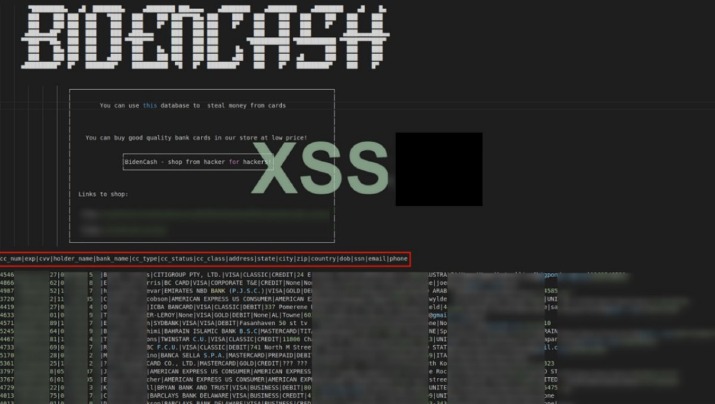
Join us as we break down and discover the methodologies of card fraud using our dark web monitoring tool, Lunar. Judging from the activity on the shop, BidenCash appears to be thriving in 2023, providing an active data and money exchange platform in a market that has experienced a decline in recent years. This time, the leaked data contains card numbers, expiration dates, and three-digit security codes (CVVs). The expiration for most cards reviewed by BleepingComputer ranges from 2025 to 2029, but we also spotted a few expired entries from 2023. Contrary to popular belief, most carding platforms no longer hide in the dark web (i.e. the Tor network). The sites I’ve evaluated this year all had clear web addresses—with ‘.onion’ versions available for some of them.
Is It Legal To Buy Credit Card Information On The Dark Web?
Freshtools is a unique marketplace in that it does not only provide the stolen data, but it allows criminals to purchase MaaS which can cause further damage to the victims. It is one of the most active and up to date markets and always provides new and updated malware and data. Cloned Visa, American Express and Mastercard cards with PIN are a bargain at $20. Privacy Affairs – a data privacy and cybersecurity research group – has analyzed the supply and pricing of these goods on the Dark Web and we’ve gathered some highlights. The dark web is the notorious ‘hidden’ side of the internet – hosting websites that cannot be found on Google and can only be accessed via special browsers.
- On top of all that, they could make purchases or request money from contacts listed in the PayPal account.
- It is a hub for financial cybercrime and offers a wide range of illicit services and stolen data that cater to sophisticated cybercriminals.
- In particular, companies involved in handling large amounts of consumer data should be aware of just how easily that data can be monetised — and abused — online.
- Instead, opt for unique, complex passwords for each account, and consider a reputable password manager to keep track of them.
- Remember, while the dark web might seem like the realm of shadowy figures and digital desperados, the true power lies in the hands of those who choose to fortify their defenses.
What Are Some Common Tactics Used By Cybercriminals To Steal Credit Card Data?
Unlike other types of stolen data—such as email lists or personal information—carding exists as its own distinct niche within the cyber crime ecosystem. Stolen credit card details are often sold on platforms and websites dedicated to, and branded as, carding websites. Post the dismantling of Joker’s Stash, cybercriminals displayed adaptability by establishing new marketplaces to fill the void, highlighting the resilience of criminal enterprises. This adaptability underscores the ongoing challenge faced by financial institutions in combating the ever-evolving threat of dark web credit card marketplaces.
The dark web is a complex, multifaceted entity—both a repository of illicit opportunities and a mirror reflecting our society’s growing reliance on digital transactions. While the notion of stolen credit cards trading hands in underground markets is unnerving, it’s also a call to action. It empowers you to take control of your personal security and make better financial choices. In these shadowy marketplaces, stolen credit card data is categorized, rated, and sold. Sellers—even using quirky pseudonyms—provide information about the card’s “reliability,” such as spending limits, recent activity, and sometimes even the cardholder’s name and billing address. Buyers, ranging from petty criminals to organized crime rings, use this information to commit fraud, purchase high-ticket items, or even launder money.