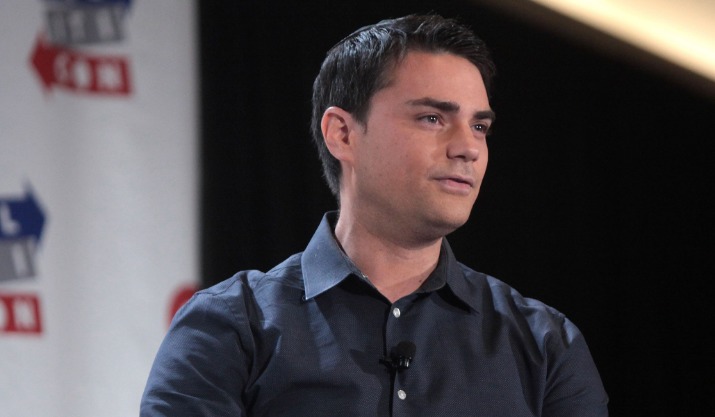
These new figures were also using new media, especially podcast platforms, to reach younger audiences and generate buzz for their intellectual movement. The term “Intellectual Dark Web” (IDW) describes a group of public intellectuals, academics, and commentators who engage in discussions on controversial, often politically sensitive topics that are typically avoided or censored in mainstream media and academic circles. In absolute terms, dark web intellectuals enjoy far more access to the mainstream than genuine leftists. But in relative terms, they have far lower status than their intellectual forebears of 20 or even 10 years ago.
Share The Intellectual Dark Web Podcast
In a time of noise, confusion, and spin, we’re committed to clarity, truth, and depth — even when it’s hard. The Intellectual Dark Web involves me, it involves Heather, it involves Eric. It involves Jordan Peterson—he’s a little bit right of center, but if you actually listen to him, there are certain topics on which he sounds downright conservative, and then there are other topics where he really doesn’t. This is all terrible metaphors here, I recognize, but the way that you posited this is maybe it’s just a society-wide thing and the campus is a place where obviously people are ready to go and kind of clash and do battle, as it always is. The content of this site is published by the site owner(s) and is not a statement of advice, opinion, or information pertaining to The Ohio State University. Neither text, nor links to other websites, is reviewed or endorsed by The Ohio State University.
- The ranks of the cranks also include author and podcaster Maajid Nawaz, briefly mentioned in the original IDW piece as a “former Islamist turned anti-extremist activist”—now a vaccine and 2020 election conspiracy theorist, and most recently seen boosting the Kremlin’s efforts to link Ukraine to the ISIS terror attack in Moscow.
- Rather than actually improving the lot of workers, many corporations prefer to make costless gestures by running diversity, equity and inclusion programs.
- What is apparently so novel about the “intellectual dark web” is not just its savvy use of Patreon or YouTube, but its claim to be eclectic and transpartisan.
- But Liu’s ideas on de-Sinicization, ethnic invention, and a coming collapse, although not always particularly original, have their adherents.
The ‘Intellectual Dark Web’ And The Long History Of Right-wing Rebranding
While they accept that social norms influence us, they object to the idea that language conjures reality into existence. There is also an irritating but genuine grain of truth deep beneath the layers of whining. Campus leftists and their allies in the media are often no more open to alternative perspectives than the New Republic white male elite of two decades ago; they can behave badly too.
Eight years ago, Shapiro wrote that Barack Obama was “the worst president in American history.” If Shapiro thinks Biden is worse than Obama, then logically he thinks Biden is the worst president in American history, which at least bodes well for the reputations of James Buchanan and Andrew Johnson. Jamie Q. Roberts has written a valuable intellectual history for non-intellectuals. Per the subtitle of his book, Roberts suggests that the IDW has served its purpose. Some of the people mentioned in it, such as Sam Harris, have already distanced themselves from IDW to maintain their intellectual independence.
Intellectual Dark Web
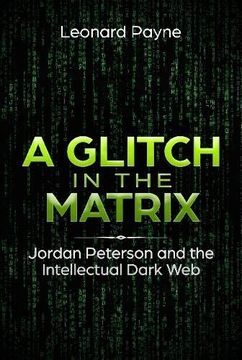
Then I wanted to buy a Kindle edition, but the Kindle edition never came out. I found this surprising but now, after a conversation with the author, I know what happened. It’s almost as if life itself is inviting us to embrace difficulty—not as punishment but as a design feature.
Why Is The Intellectual Dark Web At War With Itself?
Conservatives have tended to view democracy as a system that establishes equal rules for competition between private individuals; while liberals, progressives, and even many radicals have typically shared this view, the American left has historically supported interventions to guard against excessive inequality. During the campus wars at the end of the 20th century, “political correctness” joined the conservative conceptual arsenal to describe and fight against the left’s support for “equal outcomes” (it is perhaps no coincidence that this new term arose just as the Soviet Union was beginning to crumble). Intellectual Dark Web (IDW) is a phrase coined by mathematician Eric Weinstein referring to a loosely defined group of intellectuals, academics, political commentators who espouse controversial ideas and beliefs surrounding subjects related to free speech, identity politics and biology.
Trump Vows To Fight Tariff Ruling ‘with The Help Of The United States Supreme Court’
What united the IDW, he argues, and may yet be its legacy, is that culture of spirited, open debate that entertains false positives in search of true ones. The IDW defined itself against the ascendant culture of ‘no debate’, and Rogan hosted those forbidden debates. Springer Nature or its licensor (e.g. a society or other partner) holds exclusive rights to this article under a publishing agreement with the author(s) or other rightsholder(s); author self-archiving of the accepted manuscript version of this article is solely governed by the terms of such publishing agreement and applicable law. In 1982’s Orality and Literacy, Ong theorised that literacy is so profoundly mind-altering that it “restructures consciousness”.
Can Politics And Truth Coexist?
The map includes Liu’s “ethnic invention” of Basuria as well as other polities, including Yehetland, Komeseland, Goetland, Tshiechuria, Hakkaland, and also East Turkestan and Tibet. For Liu and his followers, these proposed nations organized around ethnicity and language are part of a struggle for independence from the People’s Republic of China and other states in Asia. This is a massive simplification, trimming Liu’s ragged bush of fascist historiography, Christian millenarianism, conspiracy theory, and anti-left extremism into a tidy landing strip. The only future for the people that live under an empire of fellaheen (fèilā dìguó 费拉帝国) is a process that he calls “ethnic invention” (mínzú fāmíng 民族发明) — basically, concoct a local Culture (capitalized after Spengler, who saw Culture as the seed and Civilization as the plant into which it grows). The process involves de-Sinicization and rejection of Han culture (tuōzhī 脱支, “to escape Shina,” borrowing the derogatory archaic Japanese term for China). The need to build new tribal nations is made all the more pressing by Liu’s prediction of a Great Flood (Dàhóngshuǐ 大洪水), an impending apocalyptic event that will see much of the world’s central governments collapse.
The “Intellectual Dark Web” And The Simplest Of Ethics
The main attraction of Harris and Shapiro’s conversation was not their philosophical sparring, but their show of solidarity against the left-wingers that had attacked them both. In the face of the politically correct left, and to a lesser extent the neo-fascist alt-right, these thinkers aim to present themselves as defenders of “reason,” “truth,” and “facts.” This attachment to rational principles — not to parties or tribes — leads them at times to characterize themselves as a new political center. Some early critics, such as Henry Farrell at Vox, argued that the stars of the IDW were “white intellectuals” resentful of being displaced from a dominant cultural position and having to endure pushback against their ideas, including sexist and racist ones. Columbia University professor and author John McWhorter, a liberal critic of the progressive left with no connection to the IDW (despite jokingly describing himself in a 2018 podcast as part of “the black wing of the Intellectual Dark Web,” a casual comment which he ruefully notes has “resonated for years”), is harshly dismissive of critiques like Farrell’s. “It’s Critical Race Theory-speak, this idea of white people circling their wagons.”2 One could also argue that the stars of the IDW were far too eccentric to have been in a culturally dominant position prior to the cultural shift toward identity politics and social-justice progressivism in the 2010s.
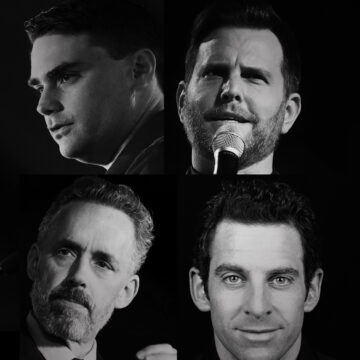
The interesting thing, though, is having been effectively evicted from the left, we ran into all sorts of other people who we thought might be a bit right of center, who it turned out were actually also left of center and had also been similarly evicted and then misportrayed. So there is a way in which everybody should think twice about why you expect the people are on the political spectrum where you think they are, because maybe they aren’t. In each case, you ought to just check whether or not you think that for a good reason or you just think that because you’ve heard that somebody’s over there.
Why The Left Needs Its Own Reckoning

The intellectual dark web, in its commitment to reality, also bemoans the postmodern devaluation of merit. “I think the pathology that’s at the core of the culture war is an attack on competence itself,” says Peterson. The 1960s saw the rise of poststructuralism, which led to postmodernism from the 1980s. The latter was influenced by the ideas of French philosopher Michel Foucault, who was concerned with dissecting power. Jamie Q Roberts is a lecturer in the Department of Government and International Relations at the University of Sydney.
“The real Trump derangement syndrome was not to have seen how appalling and dangerous and deranging it was to have a person like this get anywhere near the Oval Office,” Harris added. I interviewed Harris in 2018 for a Daily Beast feature on Rubin, and he was very complimentary of both the man and his show. Fear of offending his right-wing viewer base, Harris said, was why the ostensibly “liberal” Rubin would never criticize Trump for anything, at all. Harris and Szeps both acknowledged their belief that some of this conspiracy theorizing is fueled by failures of crucial institutions. The thinkers profiled included the neuroscientist and prominent atheist writer Sam Harris, the podcaster Dave Rubin, and University of Toronto psychologist and Chaos Dragon mavenJordan Peterson.
The intellectual dark web became increasingly well known during the first Trump presidency. Roberts wanted to write a book about the IDW because the battles of the figures within it were his own battles, he explained to me. “Since 2002 I had been struggling against identity politics and postmodernism, and trying to talk about the corrupt university hierarchy, the failures of liberal feminism, the wisdom in classic works, and so on and so on.” However, while there is some debate about whether the one-day white absence from the Evergereen campus was meant to be voluntary or enforced, the activist students’ ugly physical intimidation of both Weinstein and the college president was captured on video. In other words, the IDW was to some extent pushing back against trends that deserved a pushback. The IDW is a nexus of commentators that emerged in the 2010s to challenge the solidifying “woke” consensus on topics such as gender and academic freedom. Usually emphasising rationality, open debate and free speech, this caucus sought to defend the classical liberal worldview in an increasingly censorious and “post-truth” climate.