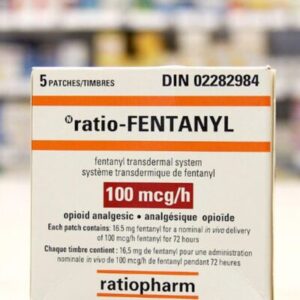
Governments often partner with non-governmental organizations to educate the public about the risks and consequences of engaging in black market activities. For example, anti-counterfeiting campaigns highlight the dangers of purchasing fake pharmaceuticals, while anti-trafficking initiatives focus on the human cost of forced labor and sexual exploitation. By addressing the root causes of demand, these campaigns seek to diminish the market for illicit goods and services, thereby reducing the incentive for criminal enterprises to operate. Human trafficking represents one of the most heinous forms of black market activity.
People buy from the black market because the good or service they want is difficult or impossible to get hold of legally (because, say, it’s banned in their country) or because they want to save some money (by, say, not paying any tax on it). It doesn’t matter what it is, a black market arises when a government makes trafficking or possessing something which has a demand illegal. Are you in Lagos specifically and want to find out what the exchange rate is right now?
The Darknet – A Wild West For Fake Coronavirus ‘cures’? The Reality Is More Complicated (and Regulated)

States engaged in total war or other large-scale, extended wars often impose restrictions on the use of critical resources that are needed for the war effort, such as food, gasoline, rubber, metal, etc., typically through rationing. Another in Britain was supplies from the U.S., intended only for use on U.S. army bases on British land, but leaked into the local native British black market. There is a big demand and a large market for these goods, despite strong laws designed to punish those who sell fake goods. The sale of counterfeit goods reduces the profits made by legitimate manufacturers and also undermines confidence in the market as a whole. Illegal markets can take a toll on an economy because they are shadow markets where economic activity is not recorded and taxes are not paid. It is often assumed that a country’s gross domestic product (GDP) is not accurate because it doesn’t account for any business activity conducted in underground markets.
Aboki Forex – Naira To Dollar Black Market Today
Whether you are looking for outfit inspiration for your new wardrobe or need assistance with a fashion emergency, our experts are here to help. Can someone please recommend best tool to manage daily FX transactions.Someone recommended FXIQ to me recently, though I am yet to chec… Plus you can shop with us from the comfort of your own home – our online store is open 24/7 for your convenience. You can also order online and pick up your order at a White House Black Market boutique if you want to save time or need a last minute date night outfit.
Jeremy Bowman has been a contributing Motley Fool stock market analyst, covering technology, consumer goods, and macroeconomic trends since 2011. Before The Motley Fool, Jeremy was a newspaper reporter, restaurant manager, and English teacher abroad. He holds a bachelor’s degree in English from Colorado College and a master’s degree in business administration from American University. One of his Motley Fool headlines was briefly featured on Late Night with Stephen Colbert.
Informal Economy
Because black market transactions fly under the official radar, they can make make it difficult for economists to figure out what a place’s economy really looks like. They’re often not included in GDP, which is the sum of all the goods and services a country produces each year. Or what looks like a high unemployment rate could really just be lots of people working secretly in the shadow economy. Although the consumer’s demand is met, usually the seller or “black marketeer” is the one who profits from a transaction.
The Future Of The Black Market
- A black market could also refer to legal activities that are sold illegally, which could include ticket resales, prescription drugs, or passes for a vacation destination.
- Another financial incentive is the ability to exploit price controls and trade restrictions.
- Demand refers to the quantity of goods and services that consumers are willing and able to buy at any given time.
- The U.S. Internal Revenue Service (IRS) estimates that the “tax gap”—the difference between taxes owed and taxes paid—was approximately $688 billion annually as of 2021, with a significant portion attributed to unreported income.
- Other types of the black market include illegal goods and services like illegal drugs, gambling, wildlife trade, fishing, logging and mining.
- Additionally, illegal goods may be of low quality or harmful to the end user, as there is no regulation of their production or distribution.
The practice of ticket resale (sometimes called scalping) is considered a black-market activity. In the early seventeenth century, for example, when Dutch and Portuguese traders first brought tea from China to Europe, it was considered a rare and highly desirable luxury. In Britain the government charged merchants a heavy import tax on tea, which made it very expensive to buy. An extensive black market in smuggled tea quickly arose, enabling merchants to avoid the tax and sell more tea at lower prices.
Operational Aspects Of Black Markets
In Europe, the spotlight is also on inflation, with August’s flash consumer price index (CPI) data for Germany, France, Spain, and Italy set to drop today. Back in the foreign exchange market, the pound held steady against the euro, trading at €1.1561 as of the most recent update. With all these economic fireworks, investors are in for a rollercoaster ride as the day unfolds.
The Black Market
Economists have argued that the vast black markets present in the world highlight the efficiency of markets and expose unused potential for revenue on the part of governments unwilling to indulge these markets. Others argue that trade in items available on the black market should be illegal due to their moral ambiguity or downright offensiveness. The Prohibition period in the early twentieth century in the United States is a classic example of the creation of a black market, its activity while the affected commodity has to be acquired on the black market, and its return to legal trade.
What Is The Black Market?
The relationship between supply and demand does much to determine the price of a product. If supply of a product is greater than demand (say 500 concert tickets go on sale for $30 each, but only 150 tickets sell), it means that not enough people are willing to buy it. The theory of supply and demand suggests that, if the concert promoter had charged a lower price, she might have sold more tickets. On the other hand, if supply is lower than demand (say 500 concert tickets go on sale for $30 each, and 750 people line up to buy them), then the principle of supply and demand says that the promoter could have charged a higher price for the tickets.
Once your account is confirmed, wire any amount from your personal bank to Dwolla from a lump sum or the estimated price of your purchase you have in mind. After you confirm the transfers, your legit money will now be stored in a new global bank with less restriction than US banks. One example is counterfeit pharmaceuticals, which the World Health Organization (WHO) estimates account for 10% of medicines in low- and middle-income countries. These fake drugs may contain incorrect dosages or harmful substances, posing serious health risks. Businesses that unknowingly accept counterfeit bills suffer financial losses when banks reject them.
Black Friday 2024 Deals
- Rum’s cheapness made it a low-profit item for the rumrunners, and they moved on to smuggling Canadian whisky, French champagne, and English gin to major cities like New York City and Boston, where prices ran high.
- The black market was made in reaction to the united states banning beer, whiskey that kind of stuff.
- As technology continues its relentless march forward, the black market will likely evolve in tandem, leveraging new tools and methods to stay one step ahead of law enforcement agencies.
- One of the most well-known counterfeiting operations was the “Superdollar” scheme, where highly sophisticated fake $100 bills were produced using advanced printing techniques.
- Firstly, the origins and evolution of this clandestine economy can be traced back to various historical contexts, including wartime rationing and prohibition eras.
Also called the “underground market,” this market gets its name due to the fact that its activity is conducted out of sight and often “in the dark,” outside the sight of law enforcement. It can be illustrated by something as innocent and innocuous as selling gum on the playground, or by something as serious as the sale of smuggled weapons or drugs. This clandestine economy covers a broad spectrum of goods and services, spanning from the illegal trade in drugs and counterfeit products to the secretive world of smuggling and even the harrowing domain of human trafficking. At its core, the black market operates on the fundamental principles of supply and demand, offering goods and services that are either inaccessible within the legal market or come at a substantially reduced cost. The economic ramifications of black markets are multifaceted, affecting both micro and macroeconomic levels.

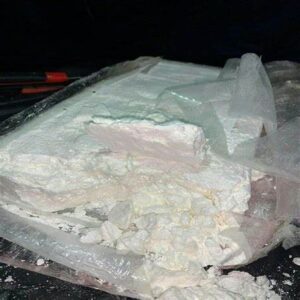
Instead, they can trap participants in a cycle of illegality and marginalization, further widening the gap between the rich and the poor. This is particularly evident in developing countries, where informal economies can constitute a significant portion of overall economic activity but offer little in terms of social mobility or economic security. Black markets encompass a wide array of illicit activities, each with its own unique characteristics and operational methods. This underground economy is vast and complex, involving the cultivation, manufacture, distribution, and sale of substances like cocaine, heroin, and methamphetamine. The drug trade is often controlled by organized crime syndicates that employ sophisticated networks to evade law enforcement and maximize profits. The sheer scale of this market has significant implications for public health and safety, as well as for the economies of both producing and consuming countries.